English
 Deutsch
 Français
 Español
 Italiano
 Nederlands
 Polski
Learn to surf
How to Choose a Surf Camp in Morocco: 9 Things to Check
Not all surf camps in Morocco are equal. Nine things to check before you book, from the instructors and group…
Swell height, period, direction, wind and tide: how to read a surf forecast for Taghazout, which sites to use, and how to tell when the beaches or the points will work.
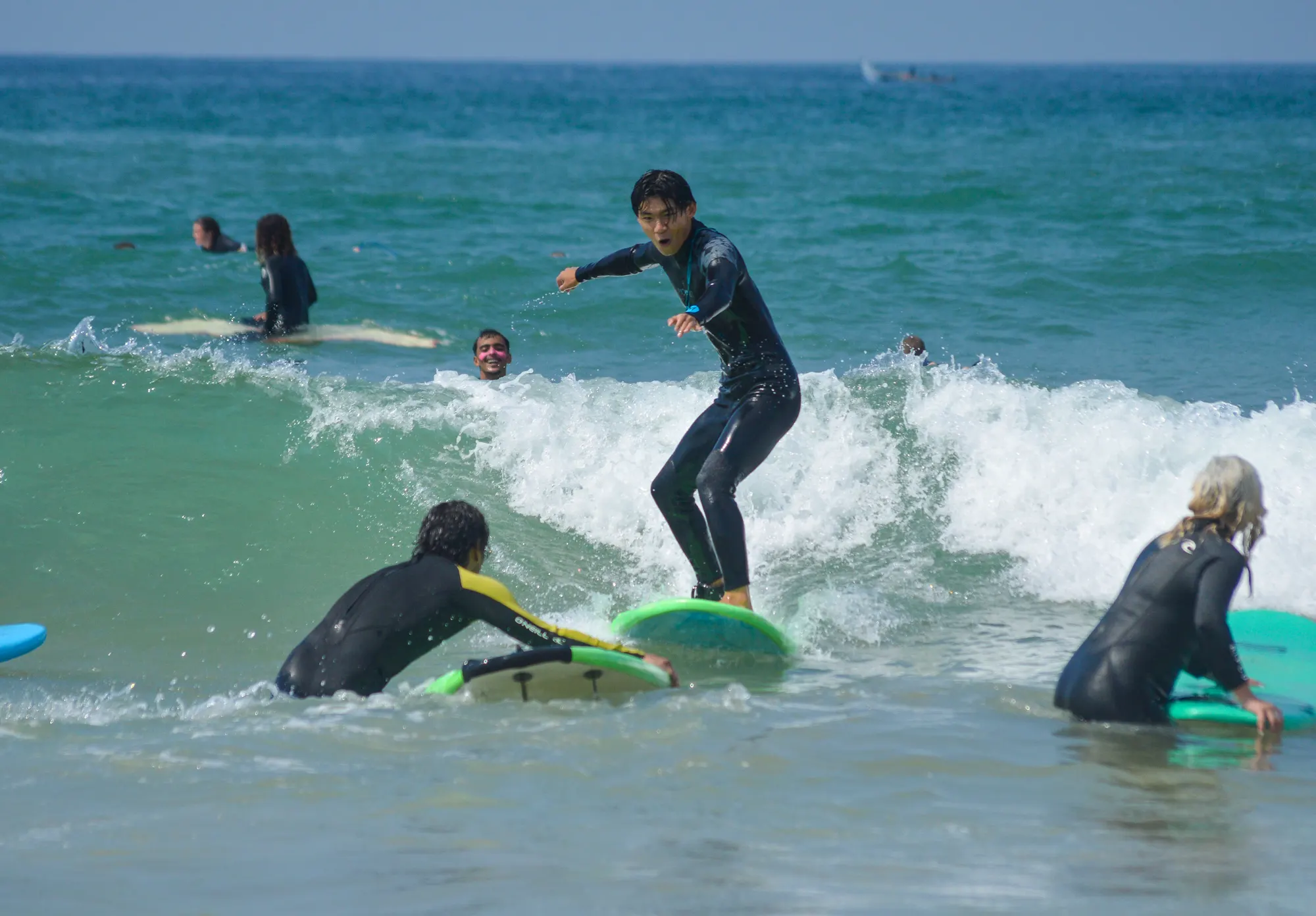
In short: a good day in Taghazout usually means a north-west swell with a long period (10 seconds or more), light wind or wind blowing from the land (east), and a tide that suits the spot. Small, shorter-period swells are what beginners want on the sandy beaches; bigger, longer swells light up the points.
Surf forecasts look complicated the first time: arrows, colours and numbers. Once you know what four or five numbers mean, you can read any forecast for Taghazout in a minute. Here is how.
| Number | What it means | What to look for in Taghazout |
|---|---|---|
| Swell height (m or ft) | How big the waves arriving from the ocean are | Beginners: small. The points need a bigger swell to work |
| Swell period (seconds) | Time between waves; longer = more power and better shape | 10 seconds or more is a good sign |
| Swell direction | Where the waves come from | North-west swells wrap into the points |
| Wind speed and direction | Wind changes the surface of the waves | Light wind, or wind from the land (east), is best |
| Tide | The height of the sea during the day | Each spot has tides it prefers; ask locally |
The swell is the energy that travels across the ocean from storms far away. In autumn and winter the North Atlantic storms send long-period swells that reach Morocco clean and powerful; that is the season for the right-hand points such as Anchor Point. In summer the swells are smaller and shorter, which suits beginners on the beaches.
A forecast of 1 metre at 12 seconds can be a much better surf than 1.5 metres at 7 seconds: the longer period means more organised waves.
Wind blowing from the sea onto the land (onshore) makes waves messy. Wind blowing from the land out to sea (offshore) holds them up and makes them clean. Around Taghazout, the coast faces west, so wind from the east is offshore. Mornings are often calmer; the wind tends to pick up in the afternoon, especially in summer.
The tide changes how and where waves break. Some beaches are better at mid tide, some points need a particular tide to work. Forecast sites show the tide times; local surfers and instructors know which tide suits which spot.
Look at two sites and compare; then check with your eyes on the beach. Forecasts are a guide, not a promise.
| Forecast | Likely good for |
|---|---|
| Small swell, short period, light wind | Beginners on the sandy beaches (K11, Devil’s Rock, Crocro) |
| Medium swell, longer period, light wind | Improvers at Banana Point or Hash Point |
| Big north-west swell, long period, offshore wind | Experienced surfers at Anchor Point and the points to the north |
| Strong onshore wind | A sheltered spot, a lesson in the white water, or a day trip |
If you stay at a surf camp, the team reads the forecast for you: each morning they choose the beach that suits your level and drive you there. That is what our daily transfers are for. See our surf spots map and surf lessons.
10 seconds or more usually means organised, powerful waves; beginners prefer smaller swells on the sandy beaches.
No wind, or wind from the east (from the land). Strong wind from the sea makes the waves messy.
From October to April. Read the best time to surf in Morocco, month by month.

Mouad runs Surf Camp Morocco in Taghazout and writes about surfing, the bay and travelling in Morocco.
Not all surf camps in Morocco are equal. Nine things to check before you book, from the instructors and group…
New direct flights to Agadir for winter 2026/27 from Frankfurt, Milan, Bratislava, Gdansk, Bordeaux and Birmingham, and how to get…
Banana Point in Aourir: a mellow right-hand point for improvers and longboarders. Best tide, swell, wind, season and what to…
Surf Camp Morocco
Planning a surf trip?
Tell us your dates and your level, and we'll suggest the right package.
Message us on WhatsApp